Noomi Basra,
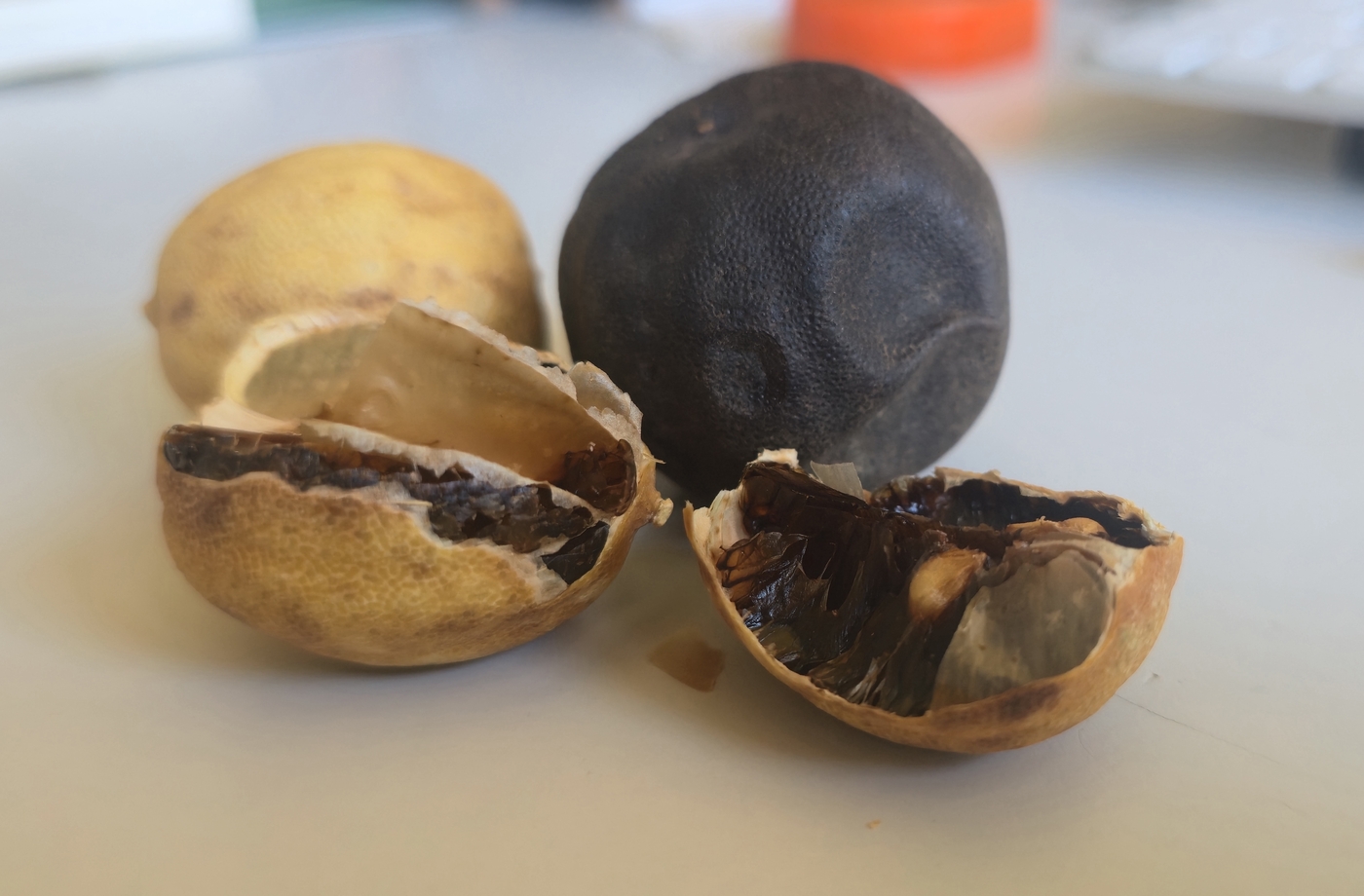
is not an arbitrary name: historically, it refers to dried limes imported from Asia and later spread through the port of Basra in southern Iraq.
Locally, it is called Noomi Basra, although the more common term is “dried limes.” This name carries with it a cultural and commercial journey—a history of exchanges, migrations, and contaminations—transforming a simple fruit into a symbol of memory and resistance.
Today, proposing the ritual of serving a beverage made with Noomi Basra is not nostalgia, but an act of resistance against pervasive, crude,
unethical consumption driven solely by profit. The ritual slows time, restores value to attention, and transforms drinking into a full sensory experience.
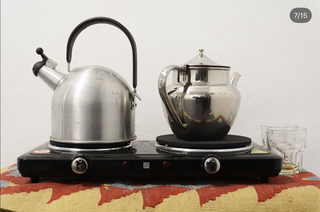
Sight is engaged by the dark, dense color of the drink. Smell is activated by the acidic aroma of dried lime and the warm, penetrating note of cardamom. Hearing comes into play when the kettle, at its peak boil, whistles as if singing something untamed, non-mechanical.
Finally, taste: the noom enters into an intimate and sensual relationship with the palate. It does not comfort or sweeten, but persists, demanding full presence, producing a brief, intense temporal ecstasy whose trace is indelible.
Noomi Basra is not just a drink. It is a relational device, a minimal ritual opposing slowness, memory, and complexity to the logic of instant consumption. A gesture that does not promise redemption, but connection.
Foto ketel: Fabrizio Contarino
Noomi Basra,
is not an arbitrary name: historically, it refers to dried limes imported from Asia and later spread through the port of Basra in southern Iraq.
Locally, it is called Noomi Basra, although the more common term is “dried limes.” This name carries with it a cultural and commercial journey—a history of exchanges, migrations, and contaminations—transforming a simple fruit into a symbol of memory and resistance.
Today, proposing the ritual of serving a beverage made with Noomi Basra is not nostalgia, but an act of resistance against pervasive, crude,
unethical consumption driven solely by profit. The ritual slows time, restores value to attention, and transforms drinking into a full sensory experience.
Sight is engaged by the dark, dense color of the drink. Smell is activated by the acidic aroma of dried lime and the warm, penetrating note of cardamom. Hearing comes into play when the kettle, at its peak boil, whistles as if singing something untamed, non-mechanical.
Finally, taste: the noom enters into an intimate and sensual relationship with the palate. It does not comfort or sweeten, but persists, demanding full presence, producing a brief, intense temporal ecstasy whose trace is indelible.
Noomi Basra is not just a drink. It is a relational device, a minimal ritual opposing slowness, memory, and complexity to the logic of instant consumption. A gesture that does not promise redemption, but connection.
Foto ketel: Fabrizio Contarino




Contatti
nopavilion@gmail.com