In 2005, I sent my youngest brother, Ahmed, a photograph that I had taken in Iraq in 1979, asking him to recreate it with a new generation of children in the same location. It was, of course, impossible to find the same children after more than twenty-five years. That impossibility became the very essence of the work.
The two photographs depict the same place, yet they belong to two irreconcilable worlds. The first preserves the innocence of childhood before decades of conflict. The second bears witness to a generation shaped by war, sanctions, and political violence. While the physical setting appears almost unchanged, the human landscape has been profoundly transformed.
Generation is not a nostalgic comparison between past and present. Rather, it is a reflection on the psychological and emotional consequences of war. It asks what remains of a society after years of destruction—not only in its buildings and streets, but in the faces, gestures, and silent memories of those who inherit its history.
The work suggests that war does not end when the weapons fall silent. Its deepest traces endure within the collective consciousness, passing from one generation to the next, long after the conflict itself has disappeared from the headlines.
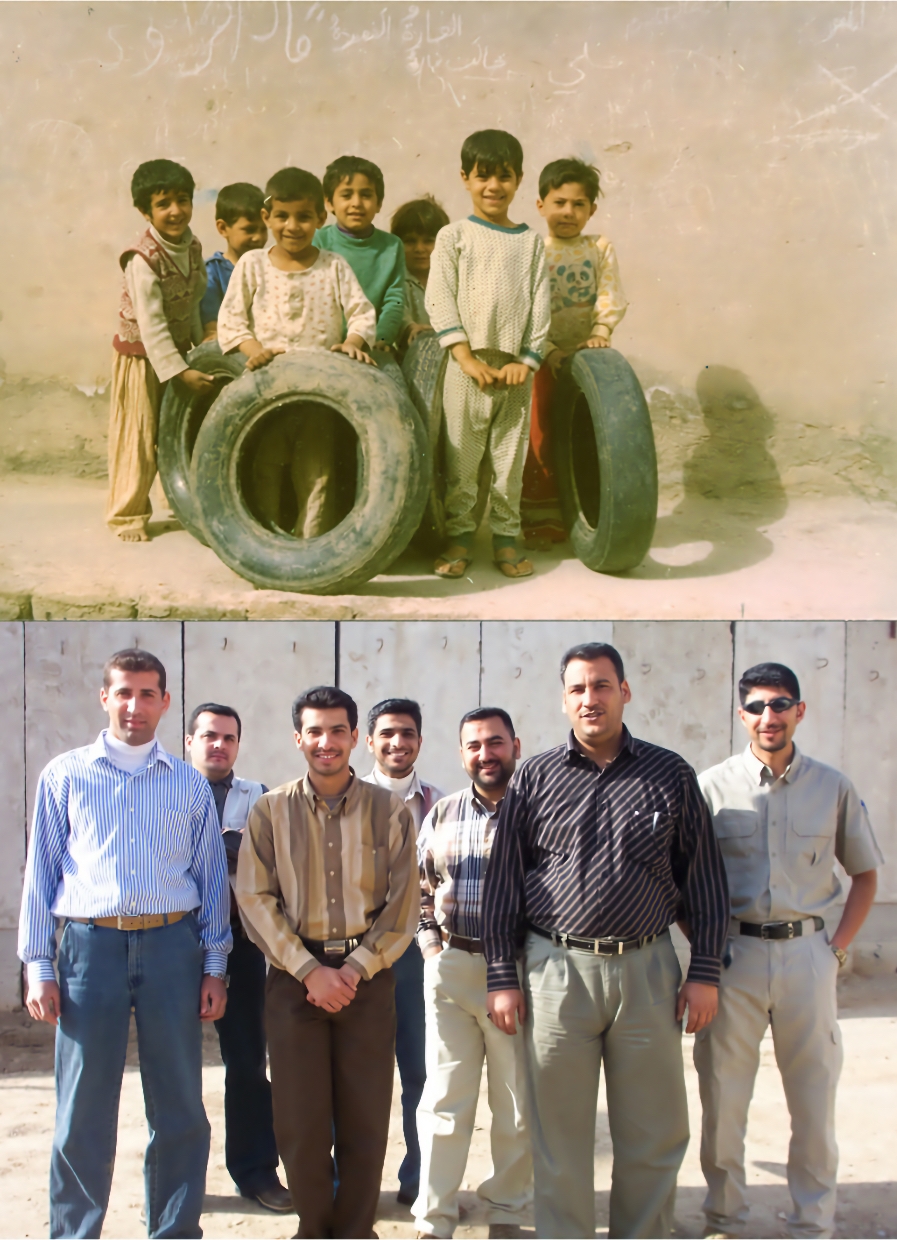
In 2005, I sent my youngest brother, Ahmed, a photograph that I had taken in Iraq in 1979, asking him to recreate it with a new generation of children in the same location. It was, of course, impossible to find the same children after more than twenty-five years. That impossibility became the very essence of the work.
The two photographs depict the same place, yet they belong to two irreconcilable worlds. The first preserves the innocence of childhood before decades of conflict. The second bears witness to a generation shaped by war, sanctions, and political violence. While the physical setting appears almost unchanged, the human landscape has been profoundly transformed.
Generation is not a nostalgic comparison between past and present. Rather, it is a reflection on the psychological and emotional consequences of war. It asks what remains of a society after years of destruction—not only in its buildings and streets, but in the faces, gestures, and silent memories of those who inherit its history.
The work suggests that war does not end when the weapons fall silent. Its deepest traces endure within the collective consciousness, passing from one generation to the next, long after the conflict itself has disappeared from the headlines.




Contatti
nopavilion@gmail.com